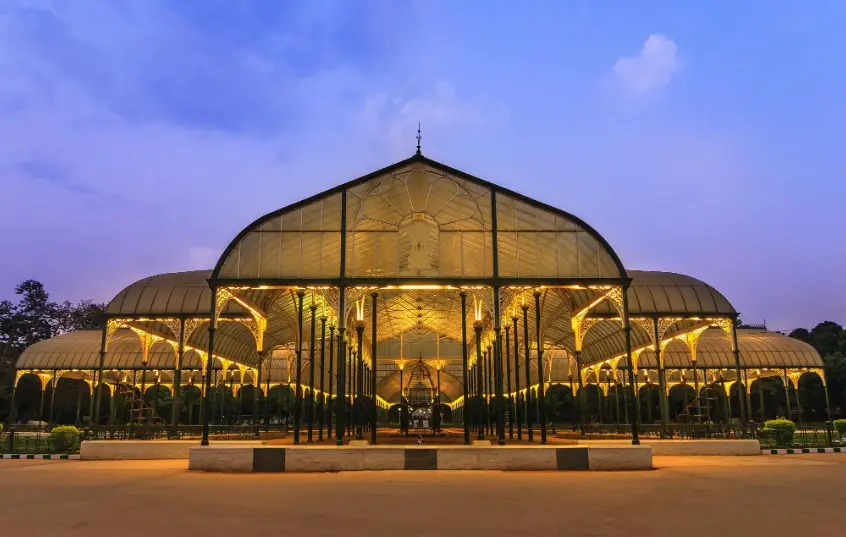
Lalbagh Botanical Garden is a historic botanical park and public green space located in Mavalli, Bengaluru, Karnataka, India. Established in 1760 by Hyder Ali and expanded by Tipu Sultan, it spans about 240 acres and houses one of India’s most diverse tropical plant collections. Managed by the Directorate of Horticulture, Government of Karnataka, it remains a premier destination for horticultural research and recreation.
History and Heritage
Commissioned during the Mysore Kingdom era, Lalbagh was modeled after Mughal gardens and later enhanced under British supervision. Its iconic Glass House, designed in 1889 and inspired by London’s Crystal Palace, hosts the famed biannual flower shows during Republic Day and Independence Day.
Flora and Landmarks
The garden contains over 1, 850 species of tropical and subtropical plants, including rare and exotic specimens from around the world. Key attractions include the Peninsular Gneiss rock formation (over 3 billion years old), Lalbagh Lake, a floral clock, a bonsai garden, and the topiary and rose gardens.
Visitor Experience
Open daily from early morning to evening, Lalbagh is a haven for walkers, photographers, and families. Entry is typically ₹25–50, with free access during early hours. Visitors often praise its serene atmosphere, historical charm, and well-maintained landscapes, though crowds increase during flower shows and weekends.
Cultural and Scientific Importance
Beyond its beauty, Lalbagh serves as a center for botanical studies and conservation. It includes nurseries, research wings, and the Director of Horticulture Office within its grounds, contributing to plant propagation and environmental education.
Address: Mavalli, Bengaluru, Karnataka 560004, India.