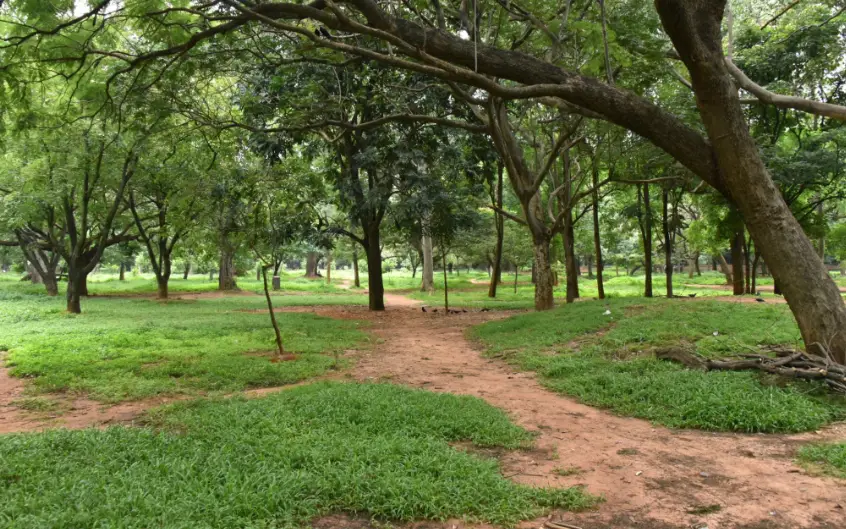
Sri Chamarajendra Park—popularly known as Cubbon Park—is a landmark urban green space in central Bengaluru, Karnataka. Established in 1870 by Major General Richard Sankey and later renamed for Maharaja Chamarajendra Wadiyar X of Mysore, the 300-acre park serves as the “lungs” of the city and an enduring symbol of its “Garden City” heritage.
History and Setting
Designed in a Victorian style with sweeping lawns, tree-lined avenues, and ornamental flowerbeds, the park sits amid civic landmarks such as Vidhana Soudha, Karnataka High Court, and the State Central Library’s distinctive red facade. Originally called Meade’s Park and later Cubbon Park, it was renamed Sri Chamarajendra Park in 1927 to honor the Wadiyar dynasty’s legacy .
Nature and Biodiversity
Home to over 6, 000 trees across roughly 100 species, the park’s flora ranges from native banyan and rain trees to imported silver oaks and rubber plants. Birds, squirrels, and butterflies thrive in its canopy, making it a favorite site for nature walks and birdwatching .
Visitor Experience and Facilities
Open to the public from 6 a.m. to 6 p.m. (Tuesday–Sunday), the park offers well-maintained paths for walking, jogging, and cycling, along with designated children’s play areas and a dog park. Cultural landmarks such as the Seshadri Iyer Memorial Hall, the Bangalore Aquarium, and the Jawahar Bal Bhavan toy train enrich the experience for families and tourists alike .
Public Perception and Role
With an average visitor rating of about 4.4 from more than 140, 000 reviews, Sri Chamarajendra Park is praised for its cleanliness, lush greenery, and tranquil ambience. Weekend crowds and limited parking are occasional drawbacks, but its blend of natural beauty, recreation, and heritage makes it one of Bengaluru’s most cherished destinations .