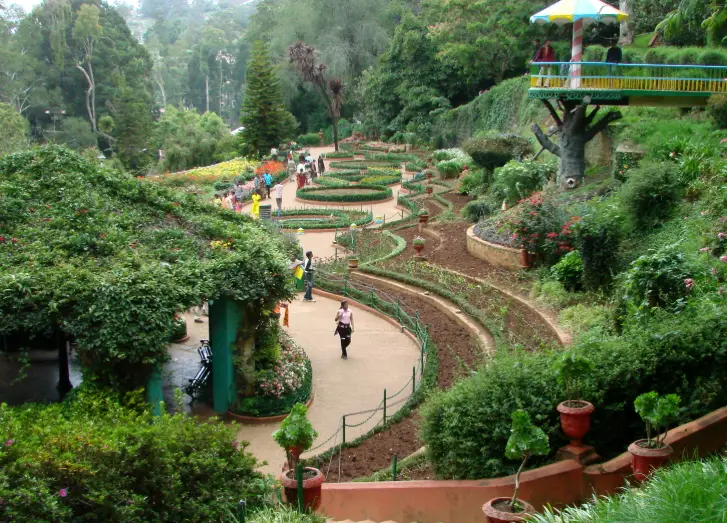
The Government Botanical Garden in Ooty, Tamil Nadu, is one of India’s oldest and most celebrated botanical gardens. Established in 1848 on the lower slopes of Doddabetta Peak, it spans about 55 acres and is maintained by the Tamil Nadu Horticulture Department. The garden serves as a living museum of exotic and native flora, blending Victorian-era landscape design with the natural beauty of the Nilgiris.
Historical Background
Laid out by British horticulturist William Graham McIvor under the guidance of the Marquis of Tweeddale, the garden was originally designed to acclimatize European plant species to Indian conditions. Over time, it evolved into a public garden and horticultural research center. Its terraced layout, Victorian glasshouses, and symmetrical flower beds reflect colonial-era aesthetics and scientific ambition.
Layout and Key Attractions
The garden is divided into five main sections—Lower Garden, New Garden, Italian Garden, Conservatory, and Nurseries. Highlights include:
- Fossilized Tree Trunk: A 20-million-year-old relic from the National Fossil Park, Thiruvakkarai.
- Italian Garden: Designed by Italian prisoners of war during World War I, featuring symmetrical floral arrangements.
- Fern and Orchid Houses: Home to rare ferns, orchids, and tropical species.
- Toda Mund: A traditional hut of the indigenous Toda tribe, showcasing Nilgiri heritage.
- Seasonal flower beds, terraced lawns, and topiary displays add to its charm.
Significance and Conservation
The garden houses over 1, 000 plant species, including cork trees, paper bark trees, magnolias, and indigenous Nilgiri flora. It functions as both a biodiversity conservatory and an educational site for botany and horticulture. The annual Ooty Flower Show, held every May, draws thousands of visitors with its elaborate floral exhibitions.
Visitor Experience
Open daily from 7:00 AM to 6:30 PM, the garden offers paved pathways, rest areas, and panoramic viewpoints across Ooty. It remains a serene retreat amid the hill station’s bustle—ideal for leisurely walks, photography, and learning about high-altitude plant ecology. The garden continues to symbolize Ooty’s colonial legacy, ecological richness, and enduring appeal as a botanical landmark in South India.